
 Deutsch
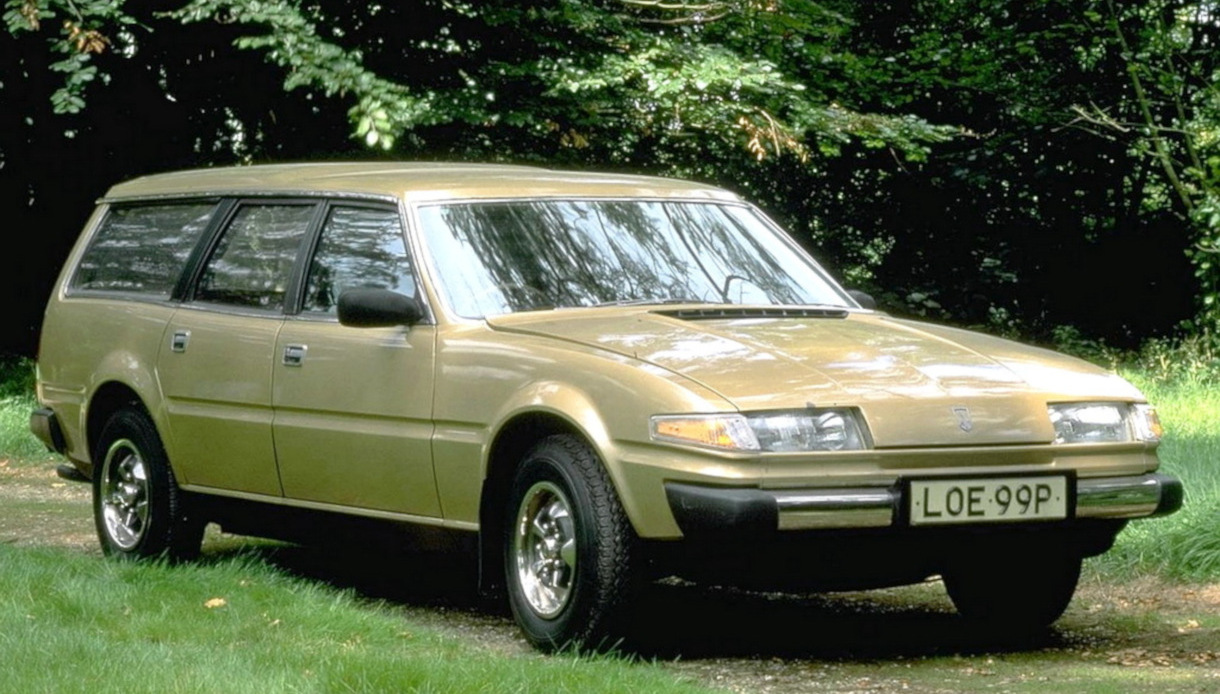
ROVER SD1 3500
Estate Prototypes
1977 - 1986
An estate model would have suited the SD1 series well, as the picture of the prototype shows.
The plan to develop a station wagon based on the SD1 3500 was a logical response to the successes of other station wagon models, particularly those from Volvo and Ford Granada, which enjoyed increasing popularity among members of the management class. As the plans became more concrete and manufacturing was to be reviewed, BL's money and human resources were extremely scarce.
For example, Carbodies of Coventry was commissioned to produce a clay model that was presented to the board of directors and positively evaluated by them. The project was now continued at BL. Two 3500 sedans were converted into station wagons. We name them here as prototype 1 and prototype 2.
Both prototypes differ considerably with regard to the design of the tailgates. While prototype 1 has a tailgate fitted into the side panels (as in the Volvo 240), the tailgate of prototype 2 reaches beyond the side panels and appears more harmonious overall. This can be seen clearly in the illustrations. It is also conceivable that Prototype 1 was built before the official approval by the Board of Management.
It is known that Sir Michael Edwards used one of the prototypes daily for a while. The BMIHT claims his prototype is their car. However, this car was only registered for a short time, so it is more likely that the prototype 2 was driven by Sir Michael. This is supported by the longer-term approval and the various equipment updates.
The plans for production of the SD1 Estate were finally buried in the early 1980s. It became clear that the life of the series was limited to just a few years. The imminent move of production from Solihull to Cowley, the high investments to be expected and the planned changes to the series from 1882 onwards left no financial room for manoeuvre for a model that would certainly have taken market share from its competitors, especially Volvo and Ford Granada. Only Sir Michael Edwards was able to enjoy this unique car.
All we can do is admire the two prototypes in the pictures or on site in the museum.
Note: The indication of the period "1976 - 1987" results from the registration data of the two prototypes.
| Prototype 1 - LOE99P - Licensed from February 1976 to February 1977 | ||
|---|---|---|
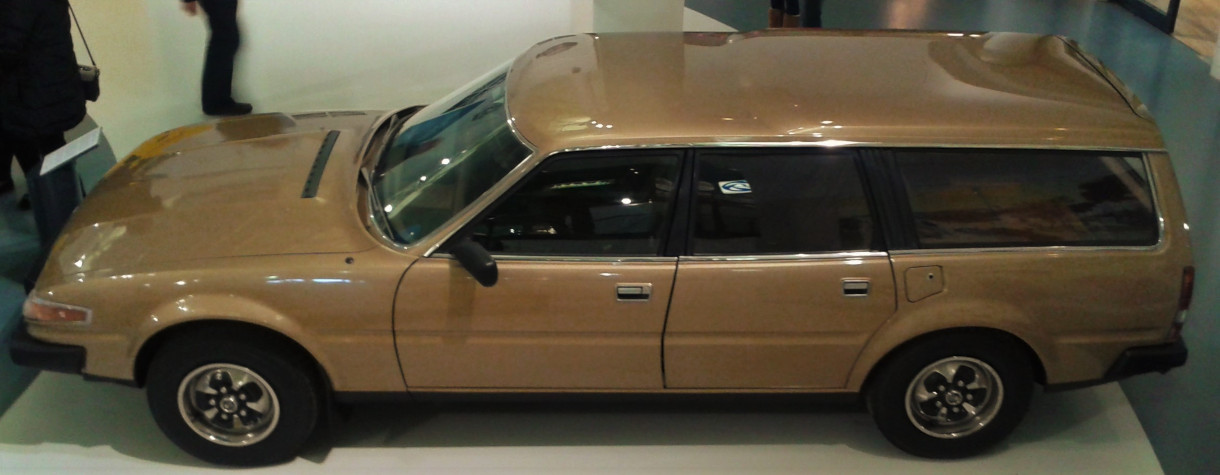 SD1 Estate Prototype 1 - side view SD1 Estate Prototype 1 - side view | ||
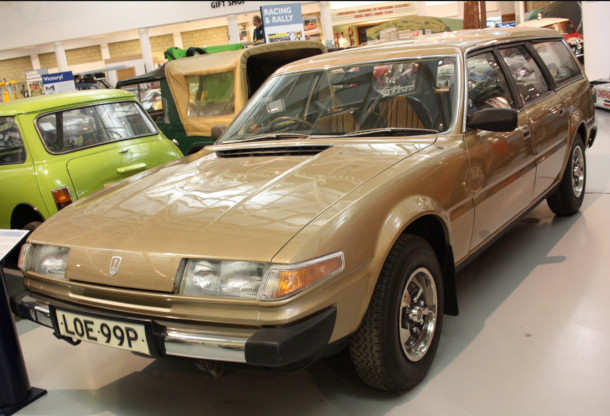 SD1 Estate Prototype 1 - front view SD1 Estate Prototype 1 - front view |
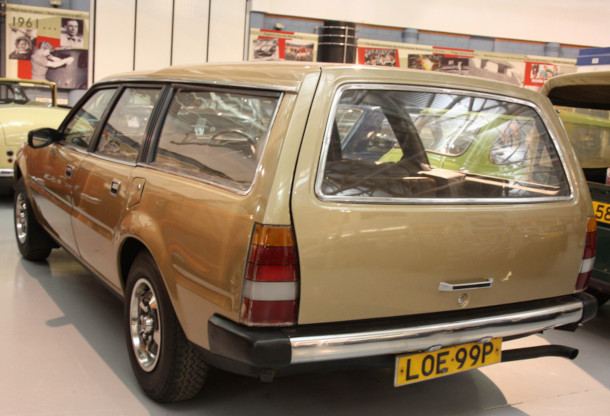 SD1 Estate Prototype 1 - rear view SD1 Estate Prototype 1 - rear view | |
The first prototype, registration number LOE99P, was licensed from February 1976 to February 1977. The main distinguishing features are as follows
This Prototype can be seen at the ➤ British Motor Museum in Gaydon, Warwickshire, England. | ||
| Prototype 2 - SHP549R - Licensed from January 1977 to November 1987 | ||
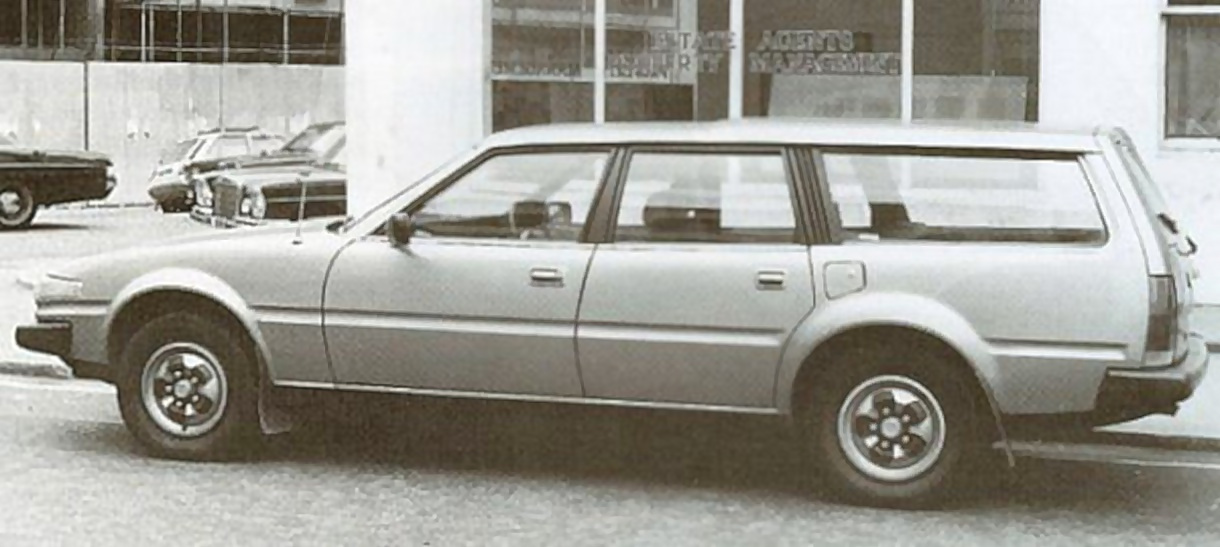 SD1 Estate Prototype 2 - side view - in 1977 SD1 Estate Prototype 2 - side view - in 1977 | ||
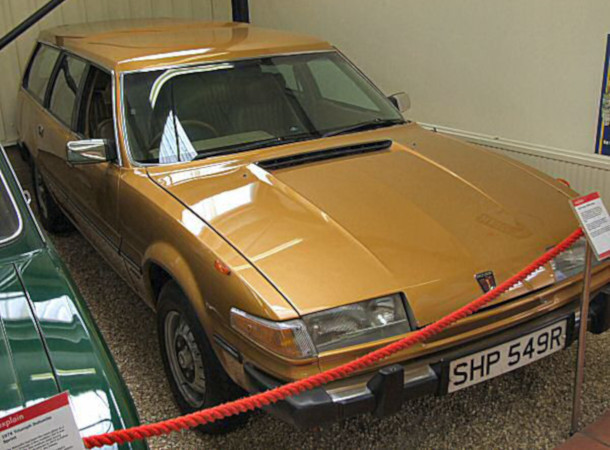 SD1 Estate Prototype 2 in the Museum - front view SD1 Estate Prototype 2 in the Museum - front view |
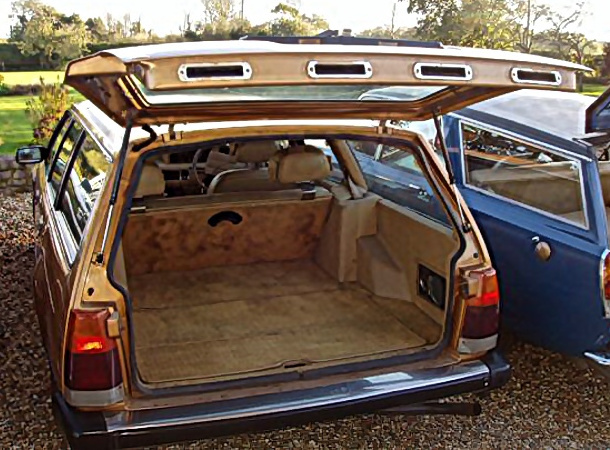 SD1 Estate Prototype 2 - luggage compartment SD1 Estate Prototype 2 - luggage compartment | |
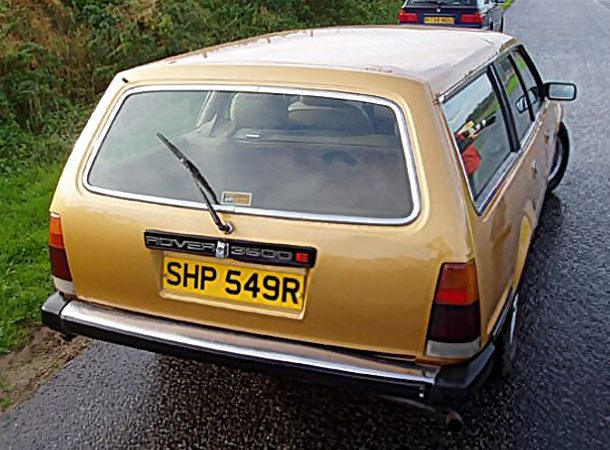 SD1 Estate Prototype 2 in the museum - rear door SD1 Estate Prototype 2 in the museum - rear door |
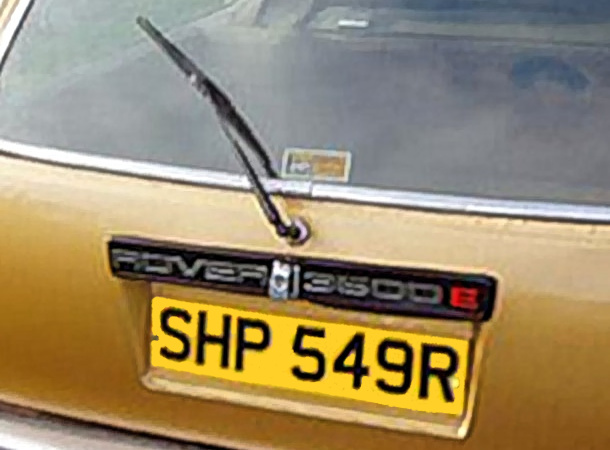 SD1 Estate Prototype 2 - Detail of the rear door SD1 Estate Prototype 2 - Detail of the rear door | |
| The second prototype, registration number SHP549R, was licensed from January 1976 to November 1987.
The main recognition and distinguishing features of the second prototype are as follows
During the licensing period, the equipment of prototype 2 was obviously adapted to the VandenPlas equipment of the series models. On the bonnet the later Rover logo is emblazoned, above the front wheel arches additional side indicators were mounted. In addition, the car was equipped with a washing system for the front headlights and lateral protective strips along the entire side of the car. The prototype can be looked at in the ➤ Haynes International Motor Museum in Sparkford, Yeovil, Somerset, England. | ||
© 2021-2026 by ROVER - Passion / Michael-Peter Börsig