
 Deutsch
ROVER SD1 3500
Tests and Reports
AMS No.17/1977
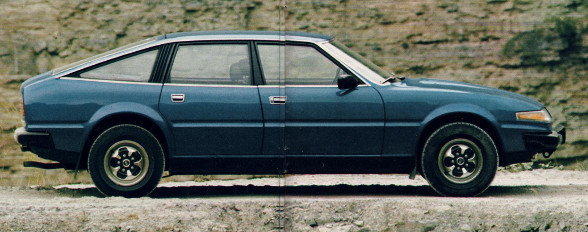
The ROVER 3500 SD1 which was tested by thr German car magazine Auto, Motor und Sport.
 In developing the new saloon, which began in December 1971, the Rover team under the leadership of Chief Engineer Spencer King, who also designed the former Rover gas turbine car, had set a clear goal: The new model was intended to be a travel saloon that would meet high standards, but at the same time be as technically simple as possible and therefore cheaper to produce than its unusually elaborately designed predecessor.
That this kind of saving should be made is not to be seen in the Rover, however. Although most viewers in this compact and indeed not particularly large saloon do not expect an eight-cylinder engine with an engine capacity of 3.5 litres, the idiosyncratic body shape leaves no doubt that it is not a cheap mass-produced car, but a highly individual appearance."
In developing the new saloon, which began in December 1971, the Rover team under the leadership of Chief Engineer Spencer King, who also designed the former Rover gas turbine car, had set a clear goal: The new model was intended to be a travel saloon that would meet high standards, but at the same time be as technically simple as possible and therefore cheaper to produce than its unusually elaborately designed predecessor.
That this kind of saving should be made is not to be seen in the Rover, however. Although most viewers in this compact and indeed not particularly large saloon do not expect an eight-cylinder engine with an engine capacity of 3.5 litres, the idiosyncratic body shape leaves no doubt that it is not a cheap mass-produced car, but a highly individual appearance."
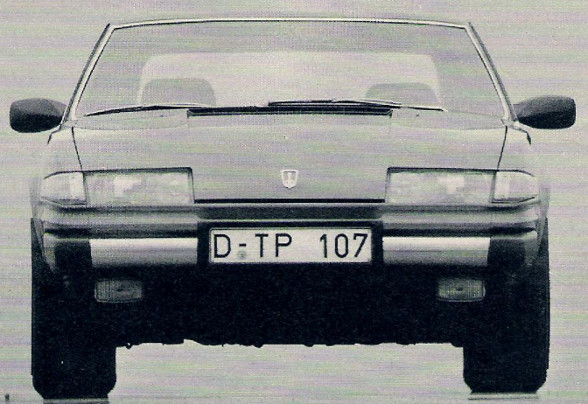
Fog lights are standard on the Rover 3500
There's a shot of Ferrari in this body shape, especially in the front end, and styling boss Bache doesn't feel offended when you point out the similarity. with the Ferrari GTB 4. He admits calmly that he has partly oriented himself to this Italian sports car."
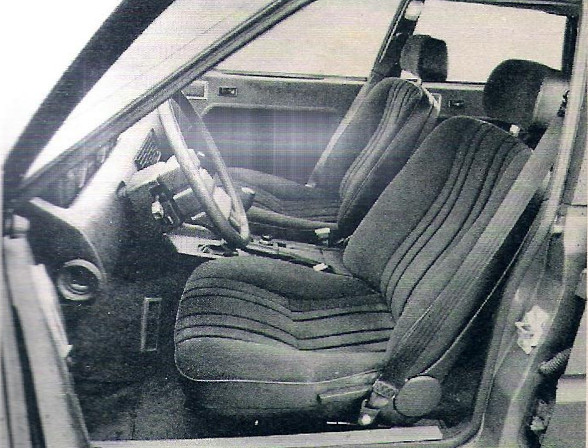
Shell-shaped seats, belt attachment to seat frame
Also in the interior there is nothing of what is considered to be typically English in this country. The use of leather is limited to the steering wheel rim, while the slightly shell-shaped upholstered seats, which offer good lateral support, are covered with fabric that has more pleasant properties in summer and winter than tanned animal skin. Sufficient space is available thanks to the long wheelbase."
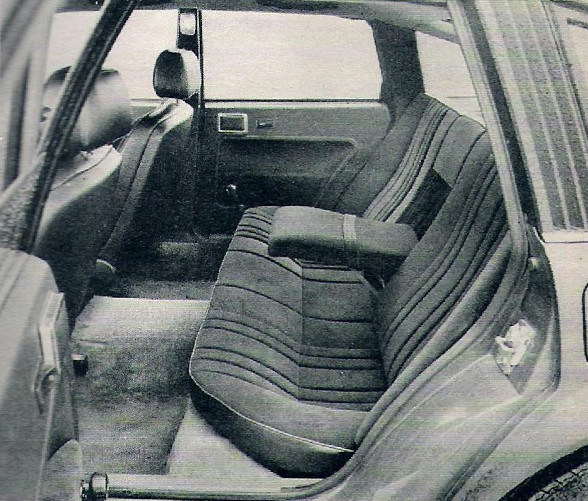
Plenty of leg room in the rear
The leg room in front of the rear seats, for example, clearly surpasses what is offered by even the somewhat larger "small" Mercedes models, and there is nothing wrong with the space available in the front."
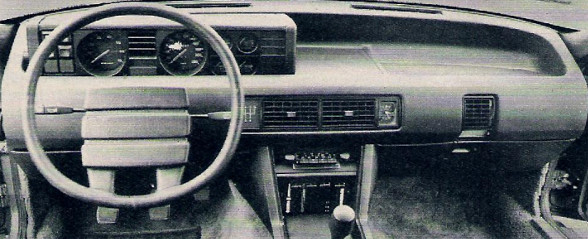
With a few exceptions, the operating elements are arranged in a practical manner.
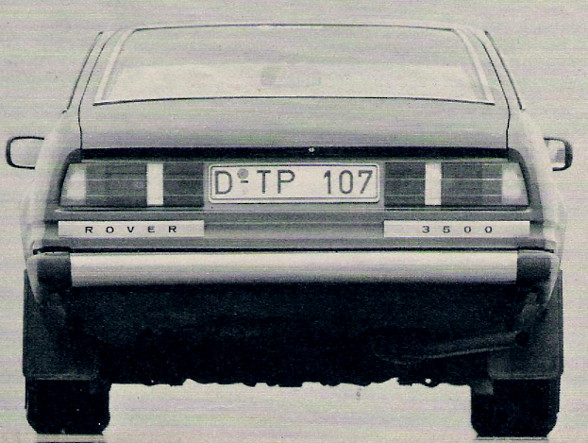
Based on the Mercedes style: ribbed, dirt-repellent combination rearlights.
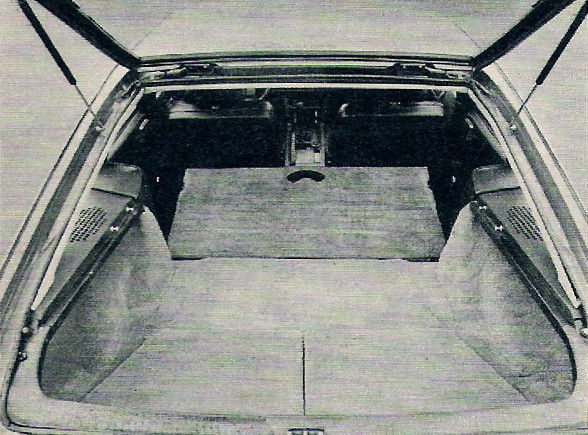
The rear seat back can be folded down.
However, the luggage compartment, which is easily accessible through the large tailgate, had a somewhat modest capacity of 388 litres - a lack that is also not quite made up for by the fact that the foldable rear seat back provides the storage capacity of a station wagon (756 litres) on request, but also for two seats."
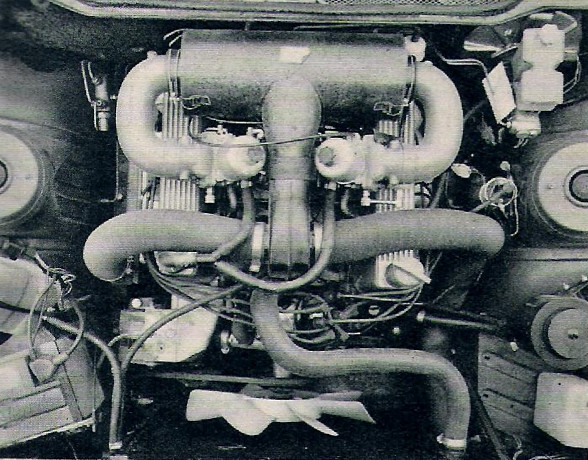
Low-speed and very economical: light alloy V8.
The Rover owes its special position within the 25,000 Mark class not only to the exclusive brand name especially in Germany, but also to the fact that eight V-shaped cylinders are at work under its flat sloping bonnet.
The light metal engine, originally an American Buick development, already used in the predecessor and also built into the Range Rover, underwent some modifications for the new saloon in order to increase performance and speed stability. Larger valves, together with a modified intake manifold and new pistons, increased the power to 157 hp (115 kW) at 5250/min; stronger valve springs now allow the eight-cylinder engine to rotate at short notice up to 6000/min (previously 5200/min).
In practice, however, this is completely superfluous. On the one hand, it takes so many crankshaft revolutions to get rid of the engine, and on the other hand, it doesn't need them at all. The elastic eight-cylinder engine, which reaches its best torque value of 28.5 mkg at only 2600 rpm, is content with 2000 to 4000 rpm even at high speed, running softly and quietly without damaging the nerves.
Even at full acceleration it is therefore not worth going up to the speed limit - the best measured values were achieved when shifting up to the next gear at 5600 rpm. The test car accelerated from a standstill to 100 km/h in 9.4 seconds and was already at 160 km/h after 26.4 seconds."
At a glance
Sophisticated English saloon with high individuality value, spacious body and sufficiently large, easily accessible and variable boot. Good clarity, extensive standard equipment, but not satisfactory in all respects. Comfortable seats, clear operation. Smooth-running, elastic eight-cylinder engine, exactly shiftable five-speed gearbox. Very good performance, unusually low fuel consumption for the displacement class (12.7 L Super/100 km). Safe driving characteristics, unsatisfactory brake stability. Satisfactory overall suspension comfort, good manageability."
© 2021-2026 by ROVER - Passion / Michael-Peter Börsig